

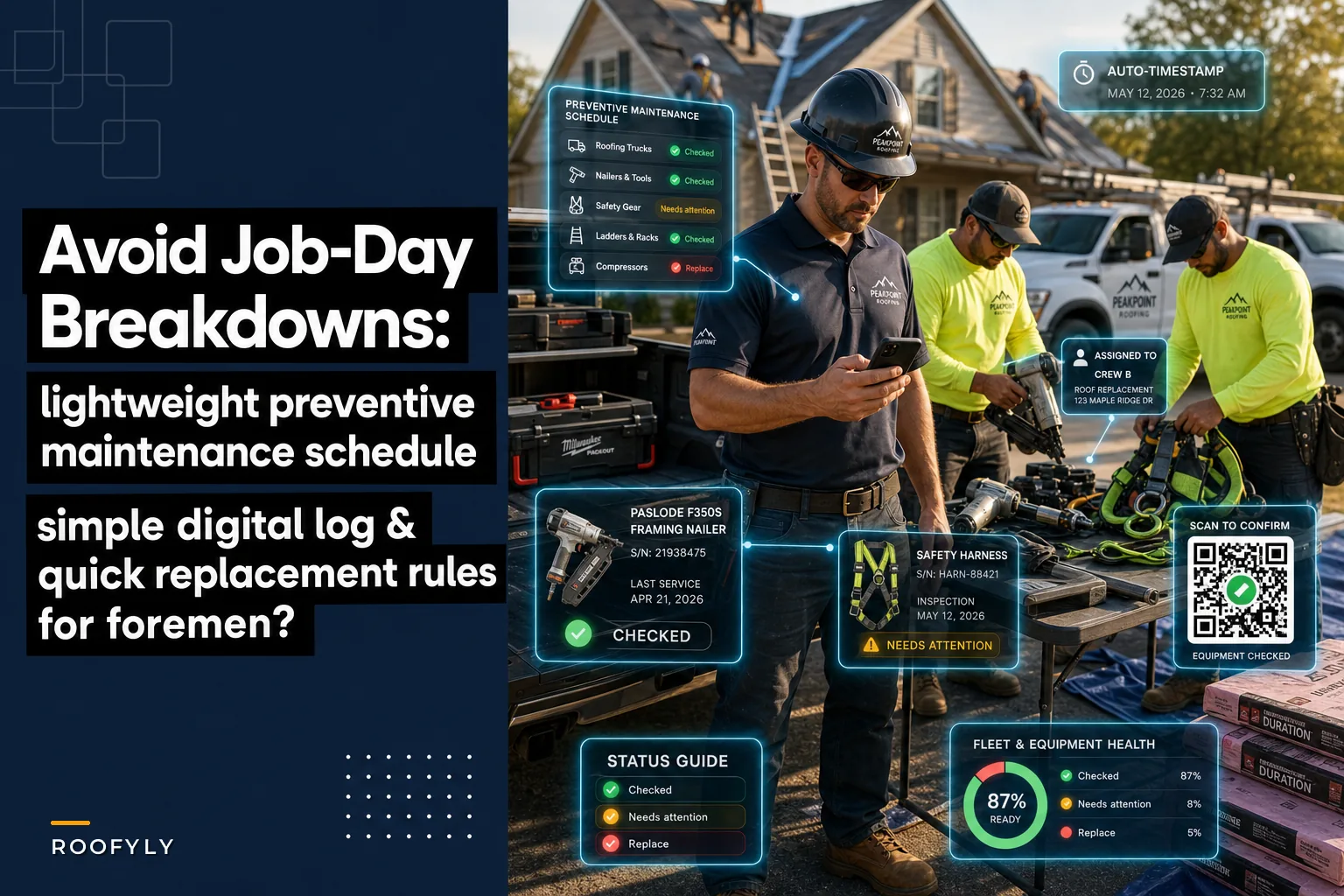

Your crew chief calls at 7:15 AM. The compressor won't start, two nailers are jamming, and somebody forgot to check whether the safety harnesses passed their monthly inspection. Now you're scrambling to rent equipment while a four-man crew sits around drinking coffee on your dime.
This keeps happening because roofing equipment preventive maintenance gets treated like an afterthought until something breaks. Most contractors either overdo it with complex fleet management systems built for trucking companies, or they wing it with mental notes and hope nothing fails during peak season.
After watching contractors burn through rental fees and lose productive hours to preventable equipment failures, the pattern is pretty clear: you need just enough structure to catch problems early, but not so much paperwork that foremen start ignoring it.
The real cost of equipment downtime that nobody tracks properly
When your pneumatic nailer dies mid-job, the rental cost feels painful enough on its own. But the actual damage runs deeper. Crew efficiency drops noticeably when they're working with unfamiliar rental equipment. Jobs that should finish by 3 PM stretch until 5:30, pushing tomorrow's schedule back before the day even ends.
Breakdowns cascade. That morning scramble to find a rental compressor means your foreman isn't reviewing job specs. The crew starts late, rushes through prep, and suddenly you're dealing with callbacks because details got missed. One failed compressor just cost you $400 in rental fees, $600 in overtime, and potentially thousands in warranty work.
The insurance side hurts too. When OSHA shows up and finds expired harness certifications or damaged fall protection gear, fines start at $15,000. Workers' comp rates climb. Liability carriers start asking uncomfortable questions about your safety protocols at renewal.
Smart roofing equipment preventive maintenance isn't about following some corporate fleet manual. It's about knowing which checks prevent the failures that actually happen in roofing work, then making those checks simple enough that they actually get done.
Why traditional fleet maintenance programs fail for roofing contractors
Most preventive maintenance advice comes from industries where equipment stays in one place or follows predictable routes. Roofing gear takes different abuse. Your trucks bounce down unpaved access roads. Compressors run in 95-degree heat on black rooftops. Nailers get dropped, kicked, and covered in tar.
Keep every roofing job on track and on time.
Roofyly helps you manage, schedule, and communicate every roofing project with precision and ease.
- Centralized project planning
- Real-time crew notifications
- Integrated scheduling & client updates
No credit card required
The typical fleet maintenance spreadsheet assumes someone has time to input data after every job. In reality, your foreman barely has time to load the truck for tomorrow. Those detailed inspection forms with 47 checkboxes become pencil-whipped nonsense by week three.
Roofing crews also deal with shared equipment problems. The Tuesday crew uses Monday's nailers. Nobody owns the maintenance, so nobody does it. By Friday, you're troubleshooting three problems that started as one loose fitting on Monday.
Traditional programs also ignore the seasonal reality of roofing work. Your maintenance needs in April look nothing like August. Spring means checking for winter damage and prepping for storm season. Summer means managing heat stress on equipment. Fall means preparing for temperature swings and early darkness.
Building a check system that foremen will actually follow
The key to roofing equipment preventive maintenance that works: make it faster to do the check than to skip it. That means ditching multi-page inspection forms for something that takes 90 seconds per item.
Start with a three-tier check system:
Daily visual checks (30 seconds per item):
-
Truck
fluid leaks under vehicle, tire condition, lights work
-
Compressor
oil level visible, no obvious damage, drain moisture
-
Nailers
no visible damage, trigger moves freely, exhaust clear
-
Safety gear
harness webbing intact, no cuts, carabiners lock
Weekly function checks (2 minutes per item):
-
Truck
brake feel, unusual sounds, warning lights
-
Compressor
pressure builds properly, safety valve works, unusual vibration
-
Nailers
depth adjustment holds, magazine feeds smoothly, consistent firing
-
Safety gear
buckles engage properly, D-rings secure, labels readable
Monthly deep checks (5 minutes per item):
-
Truck
all fluids topped, battery terminals clean, registration current
-
Compressor
change oil, clean filter, check belt tension
-
Nailers
lubricate per manual, clear debris, check all fittings
-
Safety gear
document inspection date, check expiration, test SRLs
| Check | Daily visual checks (30 seconds per item) | Weekly function checks (2 minutes per item) | Monthly deep checks (5 minutes per item) |
|---|---|---|---|
| Truck | fluid leaks under vehicle, tire condition, lights work | brake feel, unusual sounds, warning lights | all fluids topped, battery terminals clean, registration current |
| Compressor | oil level visible, no obvious damage, drain moisture | pressure builds properly, safety valve works, unusual vibration | change oil, clean filter, check belt tension |
| Nailers | no visible damage, trigger moves freely, exhaust clear | depth adjustment holds, magazine feeds smoothly, consistent firing | lubricate per manual, clear debris, check all fittings |
| Safety gear | harness webbing intact, no cuts, carabiners lock | buckles engage properly, D-rings secure, labels readable | document inspection date, check expiration, test SRLs |
This works because it matches how crews actually operate. Daily stuff happens during morning load-out. Weekly checks fit into Friday afternoon truck returns. Monthly items become rainy day projects.
Digital logging that takes less time than paper forms
Paper logbooks disappear. They get coffee-stained, lost under seat cushions, or forgotten in yesterday's truck. Even when they survive, nobody can read Mike's handwriting from three weeks ago when you're trying to figure out if the compressor got serviced.
A simple digital log changes this. Not complex fleet management software—just a basic system that works on phones. Each piece of equipment gets a QR code sticker. Scan it, tap three buttons for "checked," "needs attention," or "failed," add a photo if something looks off, done.
A simple scan-and-tap workflow works best in the field.
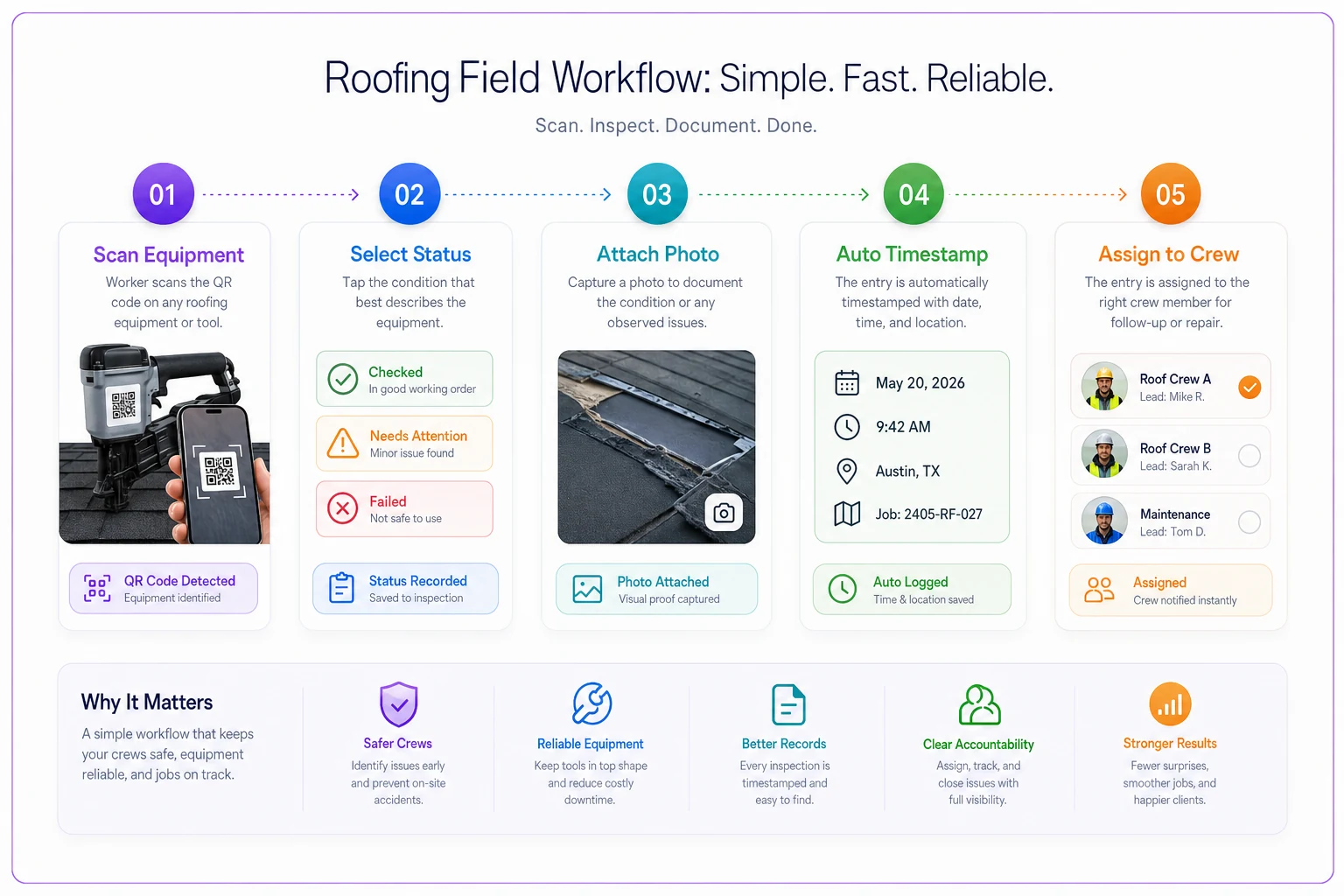
Put QR codes on each piece of equipment to make the logging process nearly frictionless.
A few things make this actually work in the field:
The log automatically timestamps everything and identifies who did the check. No more arguing about whether Tony really checked the nailers last Tuesday. The evidence exists or it doesn't.
Photos eliminate interpretation problems. When your foreman marks "needs attention" and snaps a picture of a frayed harness, you see exactly what they see. No more "looked fine to me" conversations after accidents.
The system sends automatic reminders based on actual usage, not calendar dates. If a nailer sits unused for two weeks, it doesn't need weekly checks. If it runs seven days straight during storm season, it might need extra attention.
Historical data also reveals patterns over time. When three different crews report the same compressor running rough, you know it's not user error. When nailer failures spike after certain shingle types, you can adjust maintenance schedules accordingly.
Clear replacement triggers that eliminate guesswork
The expensive mistakes happen when foremen keep running equipment past its safe life because nobody defined clear replacement criteria. "Still working" isn't a maintenance strategy.
Set specific replacement triggers for each equipment category:
Trucks - Replace when:
-
Repair costs exceed $500/month average over 3 months
-
Transmission slips under load
-
Frame rust appears at mounting points
-
Mileage hits 175,000 (for primary vehicles)
Nailers - Replace when:
-
Depth adjustment won't hold setting
-
Magazine feed jams more than once per day
-
Trigger valve leaks during operation
-
Body cracks appear near exhaust ports
Compressors - Replace when:
-
Can't maintain 90 PSI under dual nailer load
-
Oil consumption exceeds manufacturer spec by 50%
-
Tank shows any sign of rust perforation
-
Safety valve fails monthly test
Safety harnesses - Replace when:
-
Any cut or tear in webbing
-
Hardware shows deformation
-
Labels become illegible
-
Five years from manufacture date, regardless of condition
These aren't suggestions—they're hard stops. When equipment hits a replacement trigger, it comes off the truck immediately. No "just one more job" exceptions that turn into accident investigations.
Seasonal adjustment patterns most contractors miss
Your maintenance schedule in January shouldn't match July's, yet most contractors run the same checks year-round. Roofing equipment takes different abuse depending on the season.
Spring adjustments (March-May): Check for winter storage damage—seals dry out, batteries die, mice nest in equipment. Increase nailer lubrication frequency as you transition from cold to humid conditions. Test safety equipment that's been stored, especially SRLs that might have internal rust.
Summer adjustments (June-August): Compressor maintenance becomes critical. High temperatures mean more frequent oil changes and constant attention to cooling fins. Nailer O-rings fail faster in heat—keep rebuild kits in every truck. Check truck cooling systems weekly instead of monthly.
Fall adjustments (September-November): Moisture becomes your enemy. Drain compressors twice daily. Add moisture inhibitors to nailer oil. Check safety harness hardware for rust formation. Prep trucks for temperature swings that crack belts and hoses.
Winter adjustments (December-February): If you're working through winter, cold-weather lubrication matters. Standard compressor oil thickens and causes premature wear. Nailer seals become brittle. Safety equipment needs flexibility testing—frozen harness webbing can snap under shock load.
Making accountability work without micromanagement
The biggest preventive maintenance failure? Nobody owns it. The equipment belongs to "the company," so maintenance becomes somebody else's problem.
Fix this by assigning equipment to specific crews, not individuals. The Monday crew owns trucks 1 and 2, compressor A, and nailer sets 1-4. They're responsible for daily and weekly checks on their assigned gear. This creates peer pressure—nobody wants to be the guy who skipped a check and caused tomorrow's delay.
Rotate monthly deep checks between crews. This prevents any single crew from always getting stuck with maintenance duty while also ensuring fresh eyes catch developing problems. When the Tuesday crew does monthly checks on Monday's equipment, they'll definitely report issues.
Tie maintenance performance to crew bonuses. Track equipment downtime by crew. Crews that keep downtime below 2% of working hours get quarterly bonuses. Suddenly that 90-second morning check seems worth doing.
A "maintenance MVP" recognition each month also helps. The foreman with the best compliance rate gets a small bonus. Post it publicly in the shop. Make it clear that maintenance excellence gets rewarded, not just expected.
From reactive scrambling to predictive replacement
Once your roofing equipment preventive maintenance system runs for a few months, patterns start emerging. You'll notice compressor failures cluster around certain operating hours. Nailer rebuilds become necessary at predictable intervals. Truck problems spike after specific types of jobs.
This data changes how you budget. Instead of random $3,000 equipment emergencies, you schedule replacements. Buy that new compressor in March when dealers offer spring discounts, not in July when you're desperate and paying retail.
Predictive replacement also improves crew confidence. When teams know equipment gets replaced before it fails, they stop hoarding "good" nailers or fighting over newer trucks. They trust the system, which means they'll actually maintain it.
Your relationships with equipment dealers improve too. When you can tell them you'll need two new nailers in six weeks and a compressor in eight, they'll cut better deals. Some will offer loaner equipment during the transition.
Leveraging maintenance data for operational improvements
That simple digital log you've been keeping? It's useful beyond just maintenance. When you analyze a few months of data, inefficiencies start showing up.
Maybe truck 3 needs repairs every time it works downtown jobs. Tight parking garages and alley access routes are beating up your equipment. Now you can assign smaller trucks to urban jobs or build extra maintenance time into those estimates.
Nailer failure patterns might reveal training gaps. If newer guys burn through nailers twice as fast, you need better onboarding. When experienced crews maintain equipment longer, figure out what they're doing differently and standardize it.
The data also supports purchasing decisions. That bargain-brand compressor seemed like smart savings until maintenance logs show it needs service twice as often as name-brand units. The "expensive" option becomes cheaper when you factor in downtime and maintenance labor.
This same information helps with tracking labor efficiency by showing how equipment issues affect productivity rates.
When automation makes sense for maintenance management
Small contractors usually don't need complex maintenance software. But around 15-20 trucks, manual tracking gets unwieldy. That's when AI-powered operational software starts making real sense.
Good maintenance automation handles the remembering and reminding without adding complexity. The system tracks operating hours through integration with job schedules, orders common replacement parts when inventory runs low, and schedules dealer service appointments based on actual usage patterns.
The real value comes from pattern recognition. These platforms can spot that trucks assigned to coastal jobs need brake work more often due to salt exposure, or that compressors fail more frequently when ambient temperatures run high for consecutive days. That kind of visibility helps you prevent failures before they happen.
Integration with other operational systems adds more value. When maintenance schedules sync with dispatch systems, trucks get scheduled for service during natural downtime. Equipment costs get allocated accurately to jobs. Warranty claims get filed automatically when covered failures occur.
Just don't overcomplicate it. You want automation that reduces work, not software that requires a dedicated fleet manager to operate.
Making preventive maintenance stick long-term
Most contractors start strong with preventive maintenance then slide back to reactive mode within six months. The enthusiasm fades, busy season hits, and suddenly you're back to emergency repairs.
Make it stick by building maintenance into your operational rhythm, not treating it as an add-on. Friday afternoon equipment returns should automatically trigger weekly checks. First Monday of the month means deep inspections. These become as routine as morning coffee.
Keep it visible. Post a maintenance scoreboard in the shop showing days since the last equipment failure. Celebrate milestones—100 days without breakdowns is worth recognizing. When crews see their maintenance efforts preventing problems, they stay engaged.
Review and adjust quarterly. Maybe daily checks are overkill for certain equipment. Maybe monthly inspections should be every three weeks during busy season. Let the system evolve based on actual results.
The contractors who get this right aren't the ones with the fanciest systems or biggest maintenance budgets. They're the ones who found a simple approach their crews will actually follow, then stuck with it long enough to see results. Start with the basics outlined here, adjust based on your specific operation, and watch those emergency equipment runs disappear.
Ready to elevate your roofing operations?
Join hundreds of roofing contractors using Roofyly to streamline workflows, improve crew coordination, and enhance client satisfaction.